Easy Teriyaki Salmon Sushi Bowl-GF
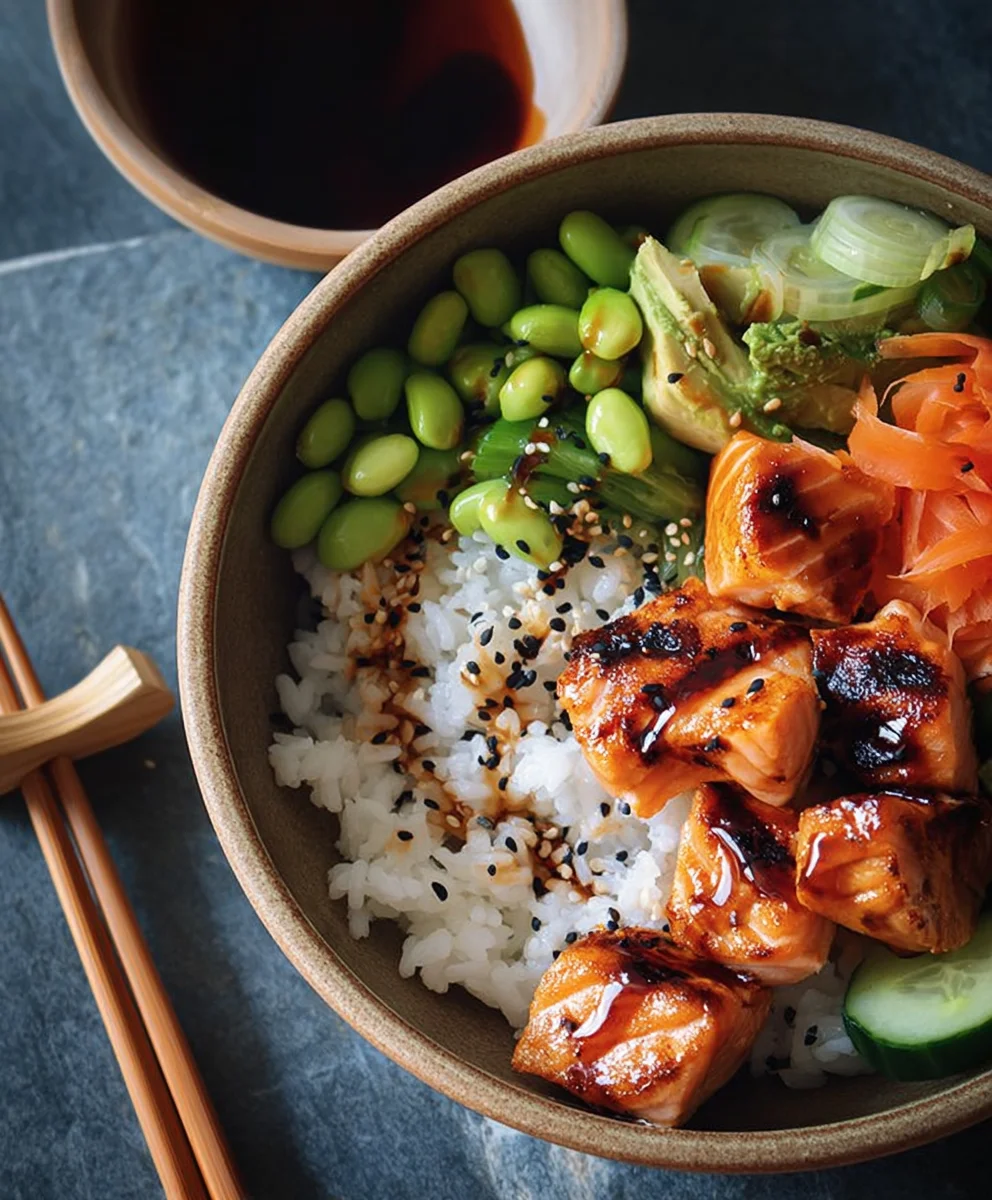
Teriyaki Salmon Sushi Bowl (GF). There’s something incredibly satisfying about a dish that brings together the vibrant flavors of sushi with the comforting warmth of a home-cooked meal. This Teriyaki Salmon Sushi Bowl (GF) is exactly that – a culinary masterpiece that’s both incredibly delicious and surprisingly easy to whip up. We all crave those meals that feel both healthy and indulgent, and this recipe delivers precisely that. The magic lies in the perfect balance: flaky, tender salmon glazed in a sweet and savory teriyaki sauce, nestled atop a bed of fluffy sushi rice, and adorned with crisp, fresh vegetables and perhaps a sprinkle of toasted sesame seeds. It’s a symphony of textures and tastes that will have you coming back for more, and the fact that it’s gluten-free makes it accessible to even more people looking for a wholesome yet exciting weeknight dinner or a light lunch. Get ready to transform your kitchen into your favorite sushi spot!
Ingredients:
- 180g (6.5oz) sushi rice
- 3 tbsp rice vinegar
- 1 tsp caster sugar
- 0.5 tsp fine salt
- 30ml (1fl oz) maple syrup
- 1 tsp sesame oil
- 2 tsp gluten free tamari soy sauce
- 0.5 tsp garlic granules
- 1 tsp non-non-non-alcoholic alternativeic non-alcoholic mirin
- 2 salmon fillets (about 150-170g each)
- 2 tbsp sesame seeds
- 4 spring onions
- 150g (5oz) edamame beans (shelled, fresh or frozen)
- Half a ripe avocado
Preparing the Sushi Rice
Cooking the Rice
Begin extract by rinsing your sushi rice thoroughly under cold running water. This step is crucial for removing excess starch, which will prevent the rice from becoming overly sticky and ensure each grain is distinct. Continue rinsing until the water runs clear. Transfer the rinsed rice to a medium saucepan and add 220ml (approximately 7.5 fl oz) of fresh cold water. Bring the water to a boil over medium-high heat. Once boiling, reduce the heat to the lowest possible setting, cover the pan tightly with a lid, and let it simmer for 15 minutes. It’s important not to lift the lid during this simmering period. After 15 minutes, remove the pan from the heat and let it stand, still covered, for another 10 minutes. This steaming process allows the rice to absorb any remaining moisture and become perfectly tender.
Seasoning the Rice
While the rice is steaming, prepare the sushi vinegar. In a small bowl, whisk together the rice vinegar, caster sugar, and fine salt until the sugar and salt are completely dissolved. Gently transfer the hot, cooked rice to a large, shallow non-metallic bowl or a traditional hangiri (wooden sushi rice tub). Pour the prepared sushi vinegar evenly over the hot rice. Using a rice paddle or a flat spatula, gently fold and cut the vinegar into the rice using a slicing motion. Avoid stirring vigorously, as this can break the rice grains. Fan the rice as you mix it; this helps to cool it down quickly and gives it a glossy sheen. Continue this process until the rice is no longer steaming and has cooled to room temperature. Cover the seasoned rice with a damp kitchen towel to prevent it from drying out while you prepare the other components of your Teriyaki Salmon Sushi Bowl.
Preparing the Teriyaki Salmon
Marinating the Salmon
First, pat your salmon fillets completely dry with paper towels. This is a vital step for achieving a good sear. In a small bowl, whisk together the maple syrup, sesame oil, gluten-free tamari soy sauce, garlic non-alcoholic alternatives, and non-non-alcoholic mirinolicolic mirin. This will form your delicious teriyaki marinade. Place the dried salmon fillets in a shallow dish or a resealable bag. Pour about two-thirds of the teriyaki marinade over the salmon, ensuring it’s well coated on all sides. Reserve the remaining one-third of the marinade for glazing later. Let the salmon marinate at room temperature for about 15-20 minutes. If you prefer a more intense flavor, you can marinate it in the refrigerator for up to 30 minutes, but avoid marinating for much longer as the acidity in the tamari can start to “cook” the fish.
Cooking the Salmon
Heat a non-stick skillet or a cast-iron pan over medium-high heat. Add a small amount of neutral cooking oil (like vegetable or canola oil) if your pan isn’t perfectly non-stick. Once the pan is hot, carefully place the marinated salmon fillets skin-side down (if they have skin). Cook for about 4-5 minutes on the first side, until the skin is crispy and golden brown. Flip the salmon fillets and cook for another 3-4 minutes on the other side, or until cooked through to your liking. During the last minute of cooking, brush the reserved teriyaki marinade over the top of the salmon fillets. This will create a beautiful glaze and deepen the flavor. Remove the salmon from the pan and let it rest for a couple of minutes before flaking it with a fork.
Assembling the Bowls
Preparing the Toppings
While the salmon is cooking and resting, prepare your remaining ingredients. Toast the sesame seeds by placing them in a dry skillet over medium heat. Stir them constantly until they are lightly golden and fragrant. This takes only a minute or two, so watch them closely to prevent burning. Set aside. Wash and thinly slice the spring onions, using both the white and green parts. For the avocado, halve it, remove the pit, and then slice it thinly. If you’re using frozen edamame beans, follow the package instructions for cooking, usually by boiling or steaming them for a few minutes until tender. Once cooked, drain them well.
Building Your Bowl
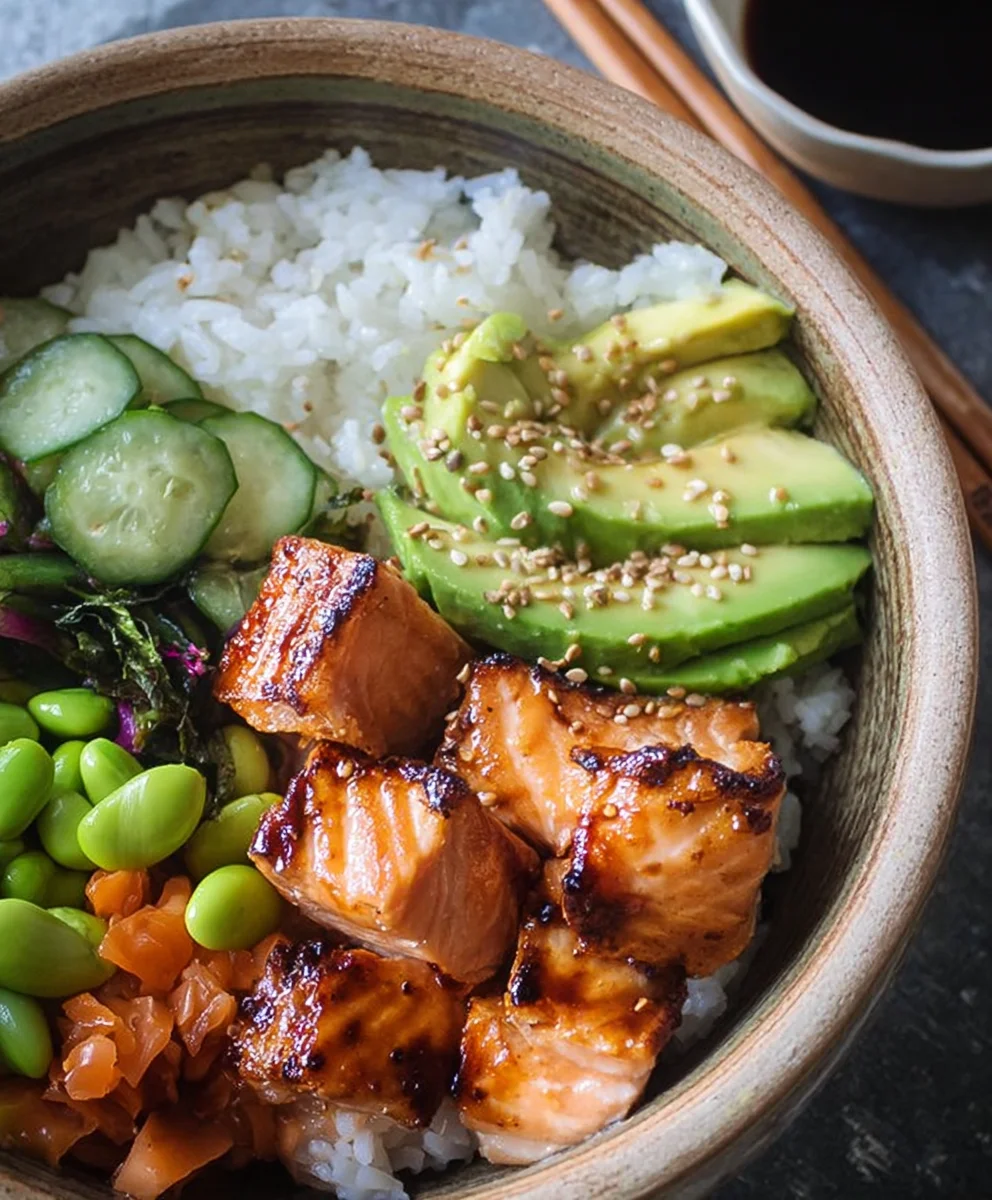
To assemble your Teriyaki Salmon Sushi Bowls, start by dividing the seasoned sushi rice evenly among your serving bowls. Aim for a generous base of rice. Next, artfully arrange the flaked teriyaki salmon over the rice. Scatter the cooked edamame beans around the salmon. Place the sliced avocado next to the other components. Finally, garnish your bowls generously with the sliced spring onions and a sprinkle of the toasted sesame seeds. If you have any extra teriyaki glaze from the pan, you can drizzle a little over the salmon for an extra touch of flavor. Enjoy your delicious, homemade, gluten-free Teriyaki Salmon Sushi Bowl!
Conclusion:
You’ve now unlocked the secret to creating a delicious and satisfying Teriyaki Salmon Sushi Bowl (GF) right in your own kitchen! This recipe is designed to be both accessible and rewarding, proving that you don’t need to be a sushi master to enjoy these vibrant flavors. The sweetness of the teriyaki glaze perfectly complements the flaky salmon, while the fresh vegetables add a delightful crunch and a burst of nutrients. Whether you’re looking for a healthy weeknight dinner or an impressive meal to share with friends, the Teriyaki Salmon Sushi Bowl (GF) is sure to be a hit. Don’t be afraid to get creative with your toppings – the possibilities are endless!
For serving suggestions, consider garnishing your Teriyaki Salmon Sushi Bowl (GF) with toasted sesame seeds, thinly sliced green onions, or a drizzle of spicy mayonnaise. This dish is also wonderful served with a side of pickled gin extractger or a small bowl of miso soup.
Feel free to experiment with variations! You can substitute the salmon with firm tofu for a vegetarian option, or add edamame, avocado, or shredded carrots for extra color and texture. For a spicier kick, add a pinch of red pepper flakes to your teriyaki sauce.
So, gather your ingredients and dive into making your very own Teriyaki Salmon Sushi Bowl (GF). We’re confident you’ll find it as enjoyable to prepare as it is to eat. Happy cooking!
Frequently Asked Questions:
Q: Can I make the Teriyaki Salmon Sushi Bowl (GF) ahead of time?
A: While it’s best to assemble the bowl just before serving to ensure the freshest flavors and textures, you can prepare some components in advance. The teriyaki sauce can be made a day or two ahead and stored in the refrigerator. Cooked rice can also be made ahead and reheated. It’s advisable to cook the salmon and chop the vegetables closer to serving time for optimal results.
Q: What kind of rice is best for a Teriyaki Salmon Sushi Bowl (GF)?
A: Sushi rice, also known as short-grain Japanese rice, is ideal for this dish. It has a sticky texture that holds together well and absorbs the flavors beautifully. If you can’t find sushi rice, medium-grain rice can also work, though it might be less sticky. Ensure you rinse the rice thoroughly before cooking according to package directions.
Easy Teriyaki Salmon Sushi Bowl-GF
A simple and delicious gluten-free sushi bowl featuring flaky teriyaki salmon, seasoned sushi rice, and fresh toppings.
Ingredients
-
180g (6.5oz) sushi rice
-
3 tbsp rice vinegar
-
1 tsp caster sugar
-
0.5 tsp fine salt
-
30ml (1fl oz) maple syrup
-
1 tsp sesame oil
-
2 tsp gluten free tamari soy sauce
-
0.5 tsp garlic granules
-
1 tsp non-alcoholic mirin
-
2 salmon fillets (about 150-170g each)
-
2 tbsp sesame seeds
-
4 spring onions
-
150g (5oz) edamame beans (shelled, fresh or frozen)
-
Half a ripe avocado
Instructions
-
Step 1
Rinse sushi rice thoroughly until water runs clear. Combine rice with 220ml water in a saucepan, bring to a boil, then simmer covered for 15 minutes. Let stand, covered, for 10 minutes. -
Step 2
While rice steams, whisk together rice vinegar, sugar, and salt. Gently fold seasoning into hot rice in a shallow bowl using a slicing motion, fanning as you go, until cooled to room temperature. Cover with a damp towel. -
Step 3
Pat salmon dry. Whisk together maple syrup, sesame oil, tamari, garlic granules, and non-alcoholic mirin for the marinade. Marinate salmon for 15-20 minutes at room temperature. -
Step 4
Heat a non-stick skillet over medium-high heat. Cook salmon skin-side down for 4-5 minutes until crispy, then flip and cook for 3-4 minutes more. Brush with reserved marinade in the last minute. -
Step 5
Toast sesame seeds in a dry skillet until fragrant. Thinly slice spring onions and avocado. Cook edamame beans according to package directions. -
Step 6
Divide seasoned rice among bowls. Flake the cooked salmon and arrange over rice. Scatter edamame, sliced avocado, spring onions, and toasted sesame seeds on top. Drizzle with any extra glaze.
Important Information
Nutrition Facts (Per Serving)
It is important to consider this information as approximate and not to use it as definitive health advice.
Allergy Information
Please check ingredients for potential allergens and consult a health professional if in doubt.